
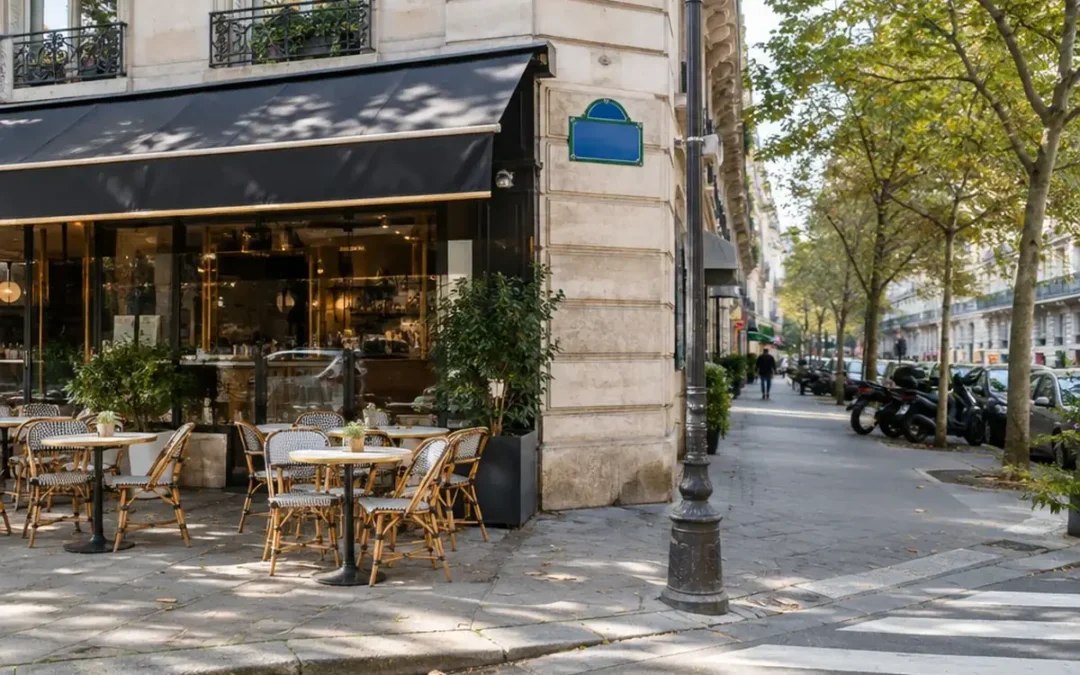
Understanding the layout of the arrondissements paris operates by is essential for navigating the French capital. Paris is divided into twenty municipal districts, each with its own character and administration. This guide explains the map, history, and key features of each district across the city.
The Snail Shell: How Arrondissements Paris Are Arranged
Parisian urban geography follows a clockwise spiral known locally as l’escargot de Paris (the Paris snail). Starting in the geographic heart at the Louvre on the right bank of the Seine, the numbering coils outward through the 20 arrondissements of Paris, terminating at the 20th arrondissement (Ménilmontant) on the northeastern edge. Street signs and official texts across the capital identify each area using Roman numerals, such as VIIe or Xe.
On October 11, 1795, Paris was first divided into 12 arrondissements, numbered from west to east—numbers 1 through 9 on the right bank and 10 through 12 on the left bank. In 1860, under Emperor Napoleon III and Prefect Baron Haussmann, neighboring communes were annexed, increasing the number of districts from 12 to 20 under the law of June 16, 1859. The total area of Paris covers 105 square kilometers (as of 1954).
The spiral pattern was devised by Jean-Frédéric Possoz, the mayor of Passy. Before 1860, the idiom se marier à la mairie du 13e (“to marry at the town hall of the 13th”) was slang for unmarried couples living together, as no 13th district existed. Wealthy residents in western areas like Passy and Auteuil objected to becoming the 13th district. Possoz’s clockwise design shifted those affluent neighborhoods into the 16th arrondissement. Today, each arrondissement is divided into four quarters, creating 80 administrative quarters across the capital.
Right Bank vs. Left Bank: The River Divide
The Seine splits Paris into two halves: the Right Bank (Rive Droite) to the north and the Left Bank (Rive Gauche) to the south. The terminology is determined by facing downstream.
The Right Bank includes 14 districts (1 through 4, 8 through 12, and 16 through 20) and covers roughly two-thirds of the city’s area. Traditionally, the Right Bank is seen as the center of business, trade, and power. The Left Bank encompasses six districts (5, 6, 7, 13, 14, and 15), recognized as an intellectual, artistic, and student quarter.
All 20 Districts at a Glance: Landmarks and Character
Every district of Paris offers a distinct streetscape. Below is an overview of key landmarks and general atmosphere across all twenty administrative areas.
| District | Bank | Key Landmarks & Highlights | Neighborhood Atmosphere |
|---|---|---|---|
| 1st (Louvre) | Right | Louvre Museum, Tuileries Garden, Palais Royal | Geographic heart of Paris |
| 2nd (Bourse) | Right | Galerie Vivienne covered passages, Rue Montorgueil | Smallest district, food and technology scene |
| 3rd (Temple) | Right | Musée Carnavalet, Musée Picasso, Marché des Enfants Rouges | Quieter northern Marais, oldest covered food market in Paris |
| 4th (Hôtel-de-Ville) | Right | Place des Vosges, Notre-Dame, Île Saint-Louis | Bustling core of the historic Marais |
| 5th (Panthéon) | Left | Sorbonne University, Panthéon, Arènes de Lutèce | Latin Quarter, student energy, bookstores and bistros |
| 6th (Luxembourg) | Left | Jardin du Luxembourg, Café de Flore, Les Deux Magots | Saint-Germain-des-Prés, bourgeois-bohemian and intellectual |
| 7th (Palais-Bourbon) | Left | Eiffel Tower, Musée d’Orsay, Hôtel des Invalides | Quiet, upscale, close to government administration |
| 8th (Élysée) | Right | Champs-Élysées, Arc de Triomphe, Grand Palais, Élysée Palace | Grand boulevards and luxury shopping |
| 9th (Opéra) | Right | Opéra Garnier, Galeries Lafayette, Grands Boulevards | Shopping and opera district |
| 10th (Entrepôt) | Right | Canal Saint-Martin, Gare du Nord, Gare de l’Est | Multicultural, young scene along the canal |
| 11th (Popincourt) | Right | Place de la Bastille, Rue Oberkampf | Densest district (40,183 people/km²), vibrant nightlife and restaurants |
| 12th (Reuilly) | Right | Bois de Vincennes, Coulée verte, Marché d’Aligre, Bercy Village | Green, residential, understated |
| 13th (Gobelins) | Left | Chinatown, Bibliothèque Nationale, Butte-aux-Cailles | Street art, modern architecture, multiethnic |
| 14th (Observatoire) | Left | Montparnasse, Paris Catacombs, Parc Montsouris | Quiet, residential, literary past |
| 15th (Vaugirard) | Left | Local markets, residential streets | Most populous district (approx. 230,000 residents), least touristy |
| 16th (Passy-Auteuil) | Right | Passy, Trocadéro, Maison de la Radio, Bois de Boulogne | Upscale residential area with Eiffel Tower views |
| 17th (Batignolles-Monceau) | Right | Batignolles, Square des Batignolles, Parc Martin Luther King | Emerging neighborhood, good restaurants, quiet core |
| 18th (Butte-Montmartre) | Right | Sacré-Cœur, Montmartre, Place du Tertre, Moulin Rouge | Steep, photogenic, artistic |
| 19th (Buttes-Chaumont) | Right | Parc des Buttes-Chaumont, Parc de la Villette, Cité des Sciences | Ample green spaces, young, multicultural |
| 20th (Ménilmontant) | Right | Père Lachaise Cemetery, Belleville, street art | Multiethnic, trendy, free from tourist crowds |
Where to Stay in Paris: Best Districts by Travel Style
Choosing where to stay in Paris depends on neighborhood character and travel priorities:
- First-Time Visitors: The 4th arrondissement (Le Marais) is the best choice for first-time visitors, situated within a 10-minute walk of Notre-Dame and 12 minutes from the Louvre, with abundant restaurants and safe streets. Alternatively, the 1st arrondissement (Louvre) offers the most central base, directly beside the Louvre, Tuileries Garden, and Metro lines 1, 7, and 14.
- Classic Parisian Atmosphere: The 5th arrondissement (Latin Quarter) is recommended for travelers seeking classic Parisian charm, historic charm, and student energy.
- Budget-Conscious Travelers: Accommodations in the 9th arrondissement (Opéra) offer rates starting from 90 to 140 euros per night, paired with excellent metro connections.
- Eiffel Tower Proximity: The 7th arrondissement is the best base for visitors prioritizing proximity to the Eiffel Tower, with the landmark situated directly within the district alongside the Musée d’Orsay and the Hôtel des Invalides.
- Districts to Weigh Carefully: Outer residential districts like the 19th and 20th arrondissements are generally not recommended for first-time visitors due to longer travel times to central landmarks.
Nightlife Hotspots: Oberkampf and Pigalle
The 11th arrondissement (Oberkampf/Bastille) is the epicenter of Parisian nightlife, featuring the highest bar density in the city. Rue Oberkampf serves as the central artery for nightlife, offering venues ranging from craft beer bars to speakeasies like Moonshiner, hidden behind a pizzeria facade.
The 18th arrondissement (Pigalle/Montmartre) represents a second major nightlife hub, featuring dance clubs, the Moulin Rouge, and live music venues.
Decoding Local Codes: The “5 to 7 Rule” and “93”
Visitors frequently encounter specific numbers and expressions in French cultural conversations:
The “5 to 7 Rule” (Cinq à Sept): Literally translating to “five to seven,” this phrase refers to the early evening window between 5:00 PM and 7:00 PM bridging the workday and dinner. In the 20th century, the term became code for a secret rendezvous with a lover before returning home. In modern France, cinq à sept usually denotes an apéro—an informal after-work drink among colleagues and friends. In contrast, in Quebec the phrase refers simply to happy hour without romantic connotations. The 3rd and 4th arrondissements (Le Marais) are popular locations for this gathering, including wine bars along Rue de Bretagne and café terraces framing Place des Vosges.
What “93” Means: In everyday parlance, “93” (pronounced neuf-trois) refers to Seine-Saint-Denis, the suburban department directly bordering Paris to the northeast. It designates multiethnic, socioeconomically challenged banlieue suburbs known for hip-hop culture and high crime rates. Within Seine-Saint-Denis, 30 percent of residents are under 30 years old, and 30 percent were born abroad.
Administrative Mergers and Postal Codes
The “Paris Centre” Administrative Merger: On July 11, 2020, following the law on the status of Paris (Loi sur le statut de Paris) of February 28, 2017, the 1st, 2nd, 3rd, and 4th arrondissements were merged into a single administrative sector named “Paris Centre” with a shared town hall. Residents selected the name via an online referendum on October 16, 2018, with more than 16,000 people voting. The town hall is located in the former 3rd arrondissement town hall at 2 rue Eugène-Spuller. Ariel Weil was elected the first mayor of Paris Centre on July 11, 2020, and re-elected in 2026. The sector encompassed approximately 100,000 residents across 5.59 square kilometers as of 2017. School districts (carte scolaire) remained unchanged, and individual postal addresses and codes (75001–75004) were retained.
How Paris Postal Codes Work: Every Paris arrondissement has its own five-digit postal code, from 75001 (1st arrondissement) to 75020 (20th arrondissement). The first two digits (75) represent the department of Paris, while the last three digits indicate the specific arrondissement. The 16th arrondissement is the only district with two postal codes: 75016 (southern sector) and 75116 (northern sector), introduced in 1972 because the district had grown too populous for a single number. Paris also uses the generic code 75000 and the INSEE code 75100 for the entire city.
Frequently Asked Questions
How many arrondissements are there in Paris?
There are 20 arrondissements in Paris. They are numbered 1 to 20 in a clockwise spiral starting at the Louvre in the city center and winding outward to the 20th arrondissement in the northeast.
What is the nicest arrondissement to stay in Paris?
For first-time visitors, the 4th arrondissement (Le Marais) is considered the best choice due to its central location, safety, restaurant scene, and walking proximity to Notre-Dame (10 minutes) and the Louvre (12 minutes).
Which arrondissement is the Eiffel Tower in?
The Eiffel Tower is located in the 7th arrondissement (Palais-Bourbon), on the Left Bank of the Seine alongside the Musée d’Orsay and the Hôtel des Invalides.
What is the best arrondissement in Paris for sightseeing?
The 1st arrondissement (Louvre) is the best base for sightseeing, offering walking access to the Louvre, Tuileries Garden, Palais Royal, Sainte-Chapelle, and Notre-Dame, supported by Metro lines 1, 7, and 14.
Which Paris arrondissement is best for nightlife?
The 11th arrondissement (Oberkampf/Bastille) is the premier nightlife destination, featuring the city’s highest bar density, particularly along Rue Oberkampf.
Are there any Paris arrondissements to avoid?
First-time visitors are advised against staying in outer districts such as the 19th and 20th arrondissements due to longer travel times to central landmarks.